
Tempered glass with a fine dot pattern printed on its outer surface. The pattern helps birds notice the glass, while the view stays open.
The pattern is digitally printed on the outer surface of the glass with ceramic ink and fused permanently into it during tempering. Unlike stickers, it will not peel off over time.
The dots cover the entire pane evenly. Individual bird stickers do not reduce collisions.
The pattern sits on the outside of the glass, where it breaks up reflections exactly where birds see them.
The pattern becomes part of the glass surface, and the glass remains tempered safety glass.
Birds navigate by sight, but they do not recognise glass as an obstacle. Experts estimate that millions of birds die in collisions with glass in Europe alone every year. There are two main reasons.
When a pane shows open space, sky or another window behind it, a bird sees a flight path. The risk is highest with corner glazing, glass railings and transparent partitions, and in the evening when lights are on behind the glass.
Glass reflects trees, bushes and sky. When it is darker behind the glass than in front of it, birds fly towards the reflection as if it were real habitat. This is especially dangerous during migration, when birds are in unfamiliar surroundings.
We offer two dot patterns developed on the basis of international recommendations, including guidance from Glass for Europe. The right choice depends on the collision risk at the site and on how important transparency is. On request, we can also print your own pattern.
Dot diameter
Ø 6 mm
Spacing
50 × 50 mm
Share of surface covered
≈ 1.1%
Position
Exterior (surface 1)
Glass
Tempered or laminated
For high-risk areas and up to 12 m above ground. The spacing follows the widely used 50 × 50 mm recommendation.
Dot diameter
Ø 5 mm
Spacing
100 × 100 mm
Share of surface covered
≈ 0.2%
Position
Exterior (surface 1)
Glass
Tempered or laminated
A sparser, less visible pattern for areas with lower collision risk where transparency comes first.
Bird-safe glass suits places where glass is transparent or reflects the surrounding nature.
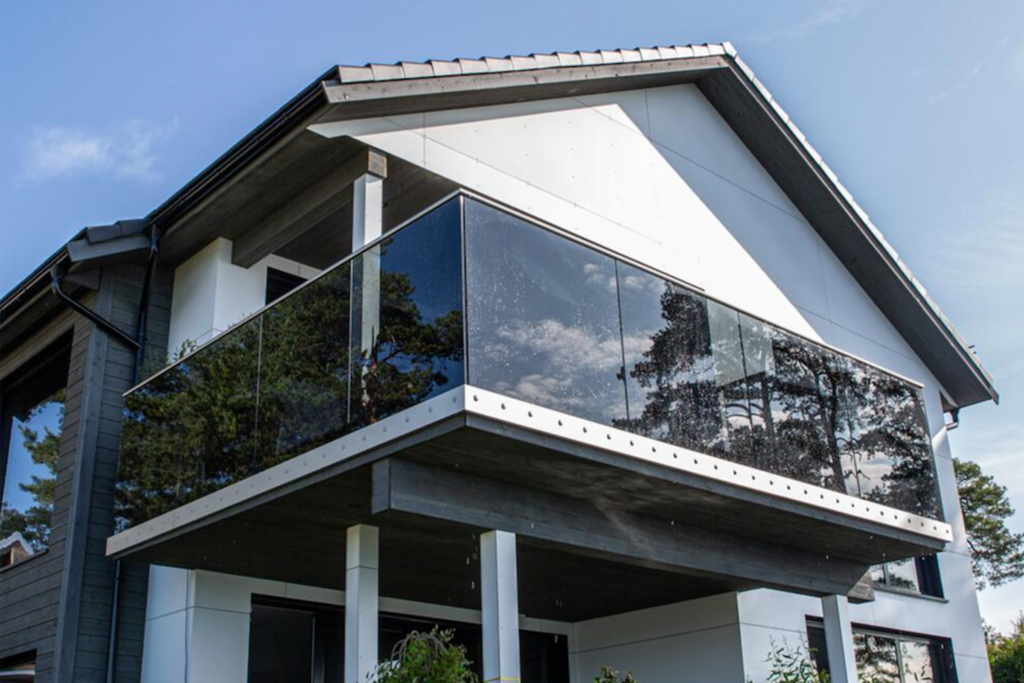
Balconies and glass railings
Glass walls and facades
Bus shelters and canopies
Noise barriers and fences
Winter gardens and verandas
Corner glazing and see-through spaces
Send us the glass dimensions, quantities, thickness and preferred pattern.